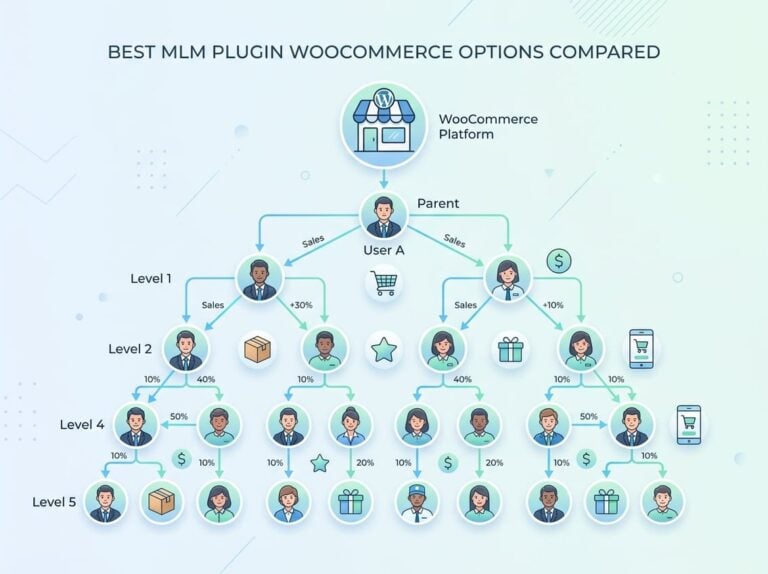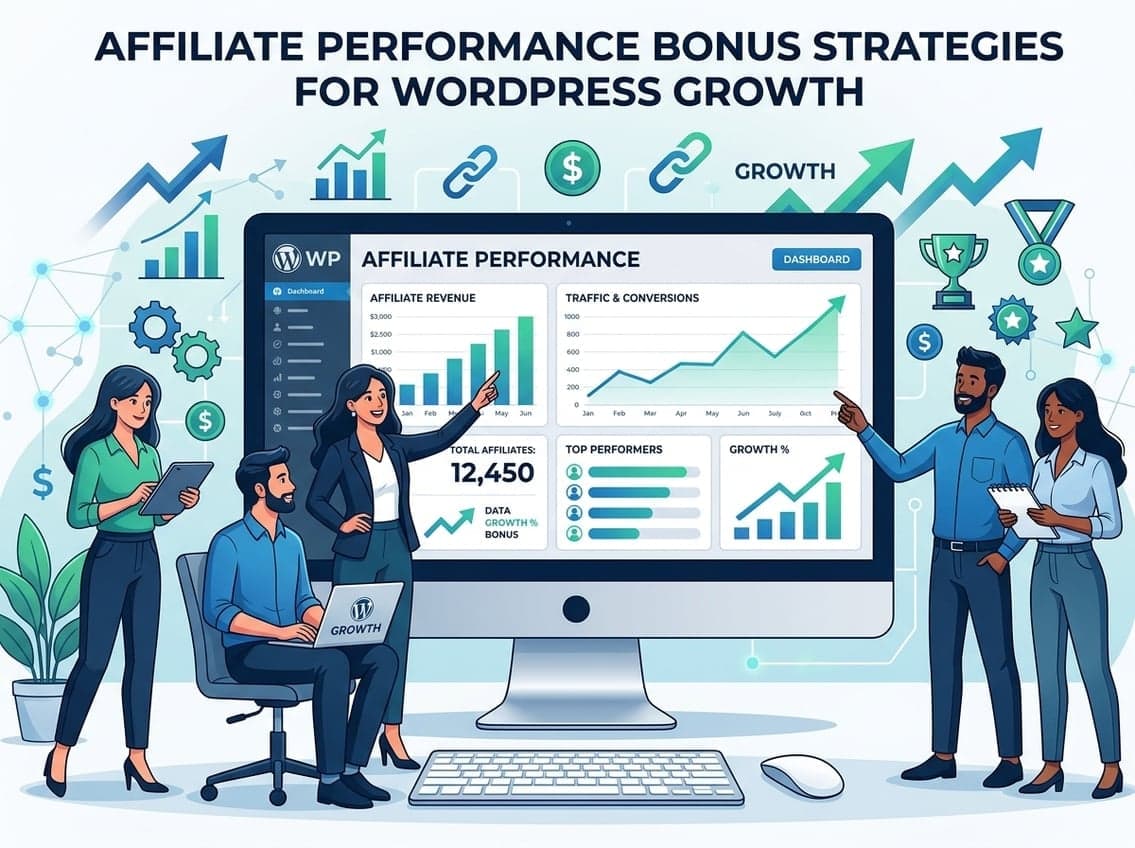
Most affiliate programs fail to retain their best partners not because the commission rate is wrong, but because there’s no escalating reward for consistently strong performance. When every affiliate earns the same flat rate regardless of whether they drove five sales or five hundred, you remove one of the most reliable levers for motivating your top partners. An affiliate performance bonus fixes that gap by tying extra rewards to specific results, not just participation.
If you’re running a WordPress or WooCommerce store and your affiliate program has plateaued, adding structured performance bonuses is often the fastest way to re-engage dormant affiliates and push active ones harder. Tools like Ultimate Affiliate Pro are built specifically for this, giving you the flexibility to configure bonus tiers, set custom triggers, and automate payouts without leaving your WordPress dashboard.
What an Effective Affiliate Performance Bonus System Should Reward
Not every metric makes sense as a bonus trigger. The right criteria depend on what your business actually needs, whether that’s more revenue, better customer quality, or higher retention.
Revenue, Sales Volume, and Qualified Referrals
The most common bonus triggers are total revenue generated and number of completed sales within a set period. Both are trackable and directly tied to business outcomes.
Qualified referrals, meaning new customers who complete a purchase and don’t refund within a set window, are a better signal than raw clicks or signups. Rewarding unqualified traffic creates payout problems and inflated numbers that don’t reflect real growth.
Conversion Rate and Conversion Quality
Two affiliates can send the same traffic volume with very different conversion rates. An affiliate with a 6% conversion rate is genuinely more valuable than one converting at 1%, even if the raw click count is similar.
If your affiliate dashboard shows conversion data by partner, use it. Set bonus criteria around conversion rate thresholds as a secondary metric rather than the primary trigger, since it rewards efficiency rather than just volume.
Customer Lifetime Value and LTV
For subscription products, memberships, or recurring billing, the first sale understates the actual value an affiliate brought in. Factoring in customer lifetime value when setting bonus thresholds helps you pay bonuses that reflect real revenue impact rather than front-loaded numbers.
Short-Term Wins vs Long-Term Affiliate Performance
Some bonus structures reward a single month’s peak output. Others track rolling 90-day performance or cumulative annual revenue. Both have a place, but long-term structures tend to build more durable affiliate habits and reduce the spike-and-drop pattern you often see with one-off promotions.
How to Structure Bonus Tiers Without Hurting Margins
Getting the math right on bonus tiers is as important as choosing the right triggers. A poorly designed Affiliate Performance Bonus structure can quietly erode margins while appearing to drive growth.
Flat Cash Bonuses vs Percentage Uplifts
A flat cash bonus, such as $100 for reaching 20 sales in a month, is simple to communicate and budget for. A percentage uplift on commissions, such as moving from 10% to 15% after a threshold, scales with order value and tends to reward higher-ticket affiliates more generously.
For most WooCommerce stores, flat bonuses work well for volume triggers, while percentage uplifts make more sense for revenue-based milestones.
Tiered Bonuses and Bonus Tiers
A clean three-tier structure is easy to explain and motivates affiliates at different performance levels. As noted in analysis of affiliate commission models, flat fees work early in a program’s life, but growing programs almost always evolve toward tiered and performance-based structures.
A simple example:
Tier | Monthly Sales | Bonus |
|---|---|---|
Bronze | 5–10 sales | $25 flat |
Silver | 11–25 sales | $75 flat |
Gold | 26+ sales | $150 flat + 2% commission uplift |
Designing a Sustainable Performance Bonus Structure
Before publishing any bonus tier, calculate the maximum possible payout per affiliate and check it against your product margin. A $150 bonus on a product with $80 average order value and 30% margin means you need roughly six to seven sales just to cover the bonus itself.
Build in a minimum order value, exclude refunded orders, and set a clear eligibility window. These aren’t fine-print tricks; they’re structural guardrails that keep your program solvent.
Bonus Periods, Payout Timing, and Clear Thresholds
Monthly bonus periods are the most common and easiest to administer. Quarterly periods can work for high-ticket products but may feel too distant for affiliates motivated by frequent feedback.
Payout timing matters. If bonuses are calculated at month-end but paid 30 days later to account for refund windows, say that explicitly. Vague payout timelines are a trust problem waiting to happen.
Bonus Ideas That Move Different Types of Affiliates
Different affiliate types respond to different incentives. A content blogger and a coupon site affiliate are motivated by completely different reward structures, and treating them the same produces mediocre results from both.
First Sale Bonus for New Affiliates
An Affiliate Performance Bonus for a first sale is one of the most reliable tools for activating new partners. New affiliates often have the enthusiasm but lack the confidence that your program will actually convert. A $10 to $25 bonus on their first confirmed sale removes friction and gives them a concrete reason to prioritize your program over competitors they’re also signed up with.
This bonus type costs relatively little but has a meaningful effect on activation rates.
Performance-Based Rewards for Top Affiliates
Your top affiliates are likely driving a disproportionate share of your revenue. A performance-based rewards structure keeps them engaged and gives them something to aim for beyond the standard commission rate.
Commission uplifts, exclusive product access, or dedicated support time all work as top-tier rewards. Cash bonuses are the simplest option, but recognition through a leaderboard or “affiliate of the month” label also has real motivational effect, especially for affiliates who care about status within your program.
Seasonal Promotions and Limited-Time Incentives
A limited-time bonus window, such as a doubled commission rate during your Black Friday promotion or a $50 bonus for any affiliate who hits 15 sales in a two-week launch window, creates urgency without permanently inflating your commission costs.
These time-boxed incentives work particularly well for activating inactive affiliates who haven’t promoted in months.
Rewards for Influencer Programs and Content Partners
Influencers and content creators often care less about incremental commission bumps and more about exclusive offers they can bring to their audience. Giving them a custom coupon code tied to a bonus threshold, plus a landing page specific to their brand, creates a stronger incentive than a generic percentage uplift.
Platforms that support affiliate landing pages and custom coupons, like Ultimate Affiliate Pro, make this much easier to set up at scale without creating a custom workflow for every partner.
Tracking Progress and Communicating Rules Clearly
A well-defined Affiliate Performance Bonus only works if affiliates can see how close they are to the next threshold. Opaque tracking is one of the main reasons even well-designed bonus programs fail to move behavior.
Using an Affiliate Dashboard to Show Progress
Your affiliate dashboard should display current-period sales, revenue, and progress toward the next bonus tier in real time. If an affiliate has to email you to find out how many more sales they need before they hit Silver, the structure isn’t motivating them; it’s creating friction.
Ultimate Affiliate Pro’s affiliate dashboard gives partners a clear view of their stats, commission history, and tier status, which removes the guesswork and keeps affiliates focused on their targets.
Reporting That Reduces Disputes and Confusion
When bonus payouts are disputed, it’s usually because the criteria were ambiguous or the data wasn’t visible to the affiliate during the bonus period. Clear, timestamped reporting that shows exactly which orders counted toward the bonus resolves most disputes before they become problems.
Periodic performance email reports that summarize each affiliate’s progress during a bonus window add another layer of transparency without requiring affiliates to log in constantly.
Making Terms, Targets, and Payouts Easy to Understand
Document your bonus terms in plain language, not legal copy. Specify exactly what triggers the bonus, when orders become eligible, how refunds are handled, and when payment goes out. Post this in the affiliate portal where it’s easy to find.
The fewer assumptions affiliates have to make, the more confidently they’ll invest in promoting your program.
How Real-Time Tracking Supports Trust
Real-time tracking isn’t just a technical feature; it’s a trust signal. When an affiliate can see a sale register within seconds of a customer checking out, they trust that the system is accurate and that their bonuses will be calculated correctly.
Delayed or batch-processed tracking creates doubt, and doubt is the enemy of affiliate motivation.
How to Recruit and Activate Affiliates Around Bonuses
An Affiliate Performance Bonus isn’t just for existing affiliates. They’re also one of your strongest recruiting tools when communicated clearly in your outreach.
How to Invite Affiliates With the Right Offer
When reaching out to potential affiliates, leading with the base commission rate alone is rarely enough to stand out. Including a first sale bonus, a clear tier structure, or a limited-time onboarding incentive in your initial pitch gives prospective partners a concrete reason to sign up now rather than bookmark your page and never return.
A specific offer, such as “earn a $30 bonus on your first five sales within the first 30 days,” is far more compelling than “competitive commissions.”
Using Early Incentives to Activate New Partners
Most affiliate programs suffer from a large pool of registered affiliates who have never made a single referral. An early incentive, whether a timed first-sale bonus or a small flat reward for setting up their first affiliate link, dramatically improves activation rates.
Set a 30-day activation window from signup. Anyone who makes their first referral within that window gets the bonus. This creates urgency and filters your active affiliates from passive signups.
Giving Affiliates Links, Coupons, and Landing Pages
Activation improves when affiliates have everything they need to start promoting without additional setup on their end. Provide custom affiliate links, a branded coupon code, and a landing page specific to their audience segment from day one.
This is particularly important for content creators and bloggers, who are more likely to promote your program if they can reference a unique URL or code in their content immediately.
Keeping Momentum After the First Bonus Window
The most common drop-off point in affiliate programs is right after the first bonus is paid. Without a clear next target, many affiliates coast on their base commission or stop actively promoting.
Run quarterly contests where the top affiliate earns a bonus commission increase for the following quarter. Reset bonus tiers monthly so there’s always a new window to aim at. The goal is to give affiliates a fresh reason to compete each cycle.
Applying Bonus Strategies in WordPress and WooCommerce
WordPress and WooCommerce give you more flexibility in configuring affiliate performance bonuses than most hosted platforms, especially when you use a plugin built specifically for this purpose.
Product-Level and Category-Level Incentives
Not all products deserve the same bonus trigger. You might want to push a specific product category, clear old inventory, or drive sales of a high-margin membership tier. With a plugin like Ultimate Affiliate Pro, you can set different commission rates and bonus thresholds at the product or category level without affecting the rest of your program.
This granularity is something basic affiliate plugins often lack. If you’re running WooCommerce and need product-specific bonus rules, check out the full feature set on the Ultimate Affiliate Pro site to see how commission customization works in practice.
Recurring Revenue, Memberships, and Subscription Offers
For WooCommerce Subscriptions or membership products, the real value of an affiliate referral isn’t the first payment. It’s every renewal that follows. Your bonus structure should account for this by either paying a recurring commission on each renewal or setting a bonus threshold based on cumulative subscription revenue over a rolling period rather than just initial sales.
Ultimate Affiliate Pro supports recurring commissions and integrates with WooCommerce Subscriptions, which makes it practical for this exact use case.
Coupon-Based Promotions and Affiliate Landing Pages
Custom coupon codes tied to specific affiliates are one of the cleanest ways to run bonus-eligible campaigns. You can assign a unique coupon to each affiliate, set the code to trigger a bonus after a set number of redemptions, and track it all from one place.
Pair this with a dedicated affiliate landing page, and you give each partner a personalized conversion path that also makes bonus attribution straightforward.
Payouts, Rankings, and Ongoing Program Optimization
Running bonuses without a clean payout process creates administrative overhead fast. Ultimate Affiliate Pro’s pricing page shows what’s included for automated payouts via Stripe and PayPal, which handles the mechanical side of bonus payments without manual calculation.
Affiliate ranking features, which display top performers in a leaderboard, add a competitive layer on top of the bonus structure. Many affiliates respond to public recognition as strongly as they respond to cash, especially in community-oriented niches.
Review bonus tier performance quarterly. If your Silver tier is consistently empty because the threshold is too high, lower it. If your Gold tier is too easy, tighten the criteria. Treat your Affiliate Performance Bonus structure as a variable you actively tune, not a permanent setting.
Frequently Asked Questions
How do you define a fair bonus tier for affiliates based on sales, margin, or new customers?
Start by calculating the maximum payout per affiliate tier as a percentage of the revenue they generate, then verify that the margin on those sales supports it. A fair starting point is to keep total affiliate cost, including base commission and bonus, below 25 to 30 percent of the net revenue generated. Adjust thresholds based on whether you’re optimizing for volume, new customer acquisition, or retention.
What conversion and AOV thresholds should trigger a higher commission rate without killing profit?
Set a higher commission tier when an affiliate’s average order value exceeds a level where the margin comfortably absorbs the uplift. For example, if your standard margin is 40% and base commission is 10%, you can safely uplift to 15% once AOV hits a threshold where the extra 5% doesn’t compress margin below your minimum acceptable level. The specific number depends on your product costs, not a universal benchmark.
How do you track and approve bonus-eligible orders in WooCommerce when refunds and chargebacks happen?
Use a holding period before bonus payouts are confirmed, typically 14 to 30 days after the order date, to catch refunds before they’re counted as eligible. Your affiliate plugin should automatically subtract refunded or cancelled orders from the bonus calculation. Clearly state this in your affiliate terms so partners understand why a sale might disappear from their eligible count.
Which WooCommerce affiliate plugins support performance tiers, and what’s the cleanest setup?
Ultimate Affiliate Pro supports tiered commissions, bonus rules at product and category level, and performance-based rank upgrades natively. It’s one of the most flexible options for WooCommerce stores that need granular bonus configuration. Competitors like AffiliateWP and Solid Affiliate offer tier options but typically require additional add-ons to replicate the same functionality.
How do you add and track affiliate links in YouTube Shorts without breaking attribution?
YouTube Shorts doesn’t support clickable links in the video itself. Direct viewers to a link in your bio or description using a clean, branded URL or a custom coupon code tied to that affiliate. Coupon-based tracking is the most reliable attribution method for short-form video since URL click tracking depends on viewers leaving the platform.
What requirements and steps get you approved for the YouTube Shopping affiliate program as a creator?
The YouTube Shopping affiliate program requires eligibility through YouTube’s Partner Program and is currently limited to specific markets and creator tiers. Requirements include a minimum subscriber count, no active community guideline strikes, and channel monetization enabled. Check the current eligibility criteria directly in YouTube Studio, as the rollout and requirements have continued to evolve through 2025 and 2026.