You can build a solid product and still watch your affiliate program stall because tracking breaks the moment a subscription renews, a membership upgrades, or a customer buys through a coupon instead of a link. The gap between a basic referral setup and one that actually scales comes down to how you find affiliates for WordPress and handle attribution across the full customer journey. Getting this right from the start saves you from manually reconciling commissions later.
If you want to build an affiliate program that tracks recurring revenue, supports multiple commission tiers, and pays affiliates automatically, Ultimate Affiliate Pro is worth looking at before you commit to a simpler option.
What You Need Before Recruiting Affiliates
Before you invite a single affiliate to your program, your commission structure, cookie settings, and approval process need to be locked in. Changing these after affiliates are already active creates confusion and erodes trust fast.
Define Your Offer, Audience, and Referral Goals
Start by answering two questions: what do you want affiliates to promote, and who should be promoting it? A WooCommerce store selling physical products has different referral goals than a membership site or an online course platform.
Your referral goals should be specific. Are you targeting new customer acquisition, subscription sign-ups, or upsell conversions? The answer shapes everything from commission rates to which affiliate types you recruit.
Choose Commission Structures That Affiliates Will Actually Promote
Flat-rate commissions are easy to understand, but they are not always the most motivating. Percentage-based commissions tied to order value give affiliates an incentive to send higher-quality traffic. Recurring commissions on subscriptions are the most powerful retention tool you have for keeping affiliates active long-term.
Consider layering your structure:
- A base commission rate for standard referrals
- Performance bonuses for affiliates who hit monthly revenue thresholds
- Lifetime commissions for affiliates who consistently drive loyal customers
- Recurring commissions on WooCommerce Subscriptions or membership renewals
Set Cookie Duration, Terms, and Approval Criteria Early
A 30-day cookie is a reasonable default for most stores, but subscription-based businesses often benefit from longer durations since purchase decisions take more time. Set your cookie duration based on your average sales cycle, not an industry default.
Decide whether you will use manual affiliate approval or automated affiliate registration. Manual approval gives you control over quality. Automated affiliate registration reduces friction for affiliates who are ready to start immediately. Many programs use a hybrid approach where the affiliate application collects enough information to filter out low-quality applicants before approval.
Where to Find Affiliates for WordPress and Your Niche
Affiliate recruitment is not about volume. Ten affiliates who genuinely use your product will outperform a hundred who signed up without context. The most effective recruitment channels to find affiliates for WordPress are closer than you think, and your signup path matters as much as where you look.
Recruit Existing Customers, Members, and Creators First
Your existing customer base is the most underused channel to find affiliates for WordPress. People who already pay for your product understand its value and can speak about it naturally. Reach out directly to customers who have left positive reviews, engaged with your support team, or referred friends informally.
Membership site owners have an even clearer path here. Members who are active in your community are already invested in your brand. A private invitation to join an affiliate program with exclusive commission terms tends to convert well because it feels like recognition, not a cold pitch.
As noted in affiliate recruitment research, warm outreach to existing customers can yield significantly higher response rates than cold outreach campaigns.
Use Content Partnerships and Communities
Look for content creators in your niche who publish comparison posts, tutorials, or product reviews. A WooCommerce plugin, for example, benefits from affiliates who write WordPress tutorials or run YouTube channels about ecommerce tools.
Online communities, Facebook groups, and niche Slack channels are useful to find affiliates for WordPress who are actively looking for programs to promote. Affiliate networks expand your reach but add a cost layer and reduce your control over affiliate quality.
Create an Affiliate Signup Path That Reduces Friction
A customizable registration form that captures the right information without overwhelming applicants keeps quality high without scaring off good partners. Ask for their website, audience size, and how they plan to promote your product. That’s enough.
Your affiliate registration page should be easy to find, mobile-friendly, and clearly explain the commission structure upfront. Affiliates will not fill out a lengthy application for a 5% flat commission with no recurring element.
How to Set Up Tracking, Attribution, and Payouts
Getting tracking right is where most basic affiliate setups fall apart. Affiliate links alone are not enough when your store uses coupons, landing pages, or subscription billing.
Use Affiliate Links, Coupons, and Landing Pages Together
Each affiliate should have a unique affiliate link, at least one affiliate coupon, and ideally a dedicated affiliate landing page. These three elements work together: a coupon captures conversions where users do not click the link directly, and landing pages improve conversion rates by matching the affiliate’s traffic to a tailored message.
Affiliate coupon tracking is especially important for social media affiliates who drive traffic through Instagram or TikTok, where clickable links are limited. Without coupon tracking, those conversions go unattributed.
Track Clicks, Referrals, and Real-Time Performance
Real-time reporting gives you and your affiliates visibility into what’s working without waiting for weekly exports. You should be able to see click tracking data, referral counts, and conversion rates by affiliate at a glance.
Useful metrics to monitor per affiliate:
- Click-to-conversion rate
- Average order value of referred customers
- Recurring referral revenue from subscription renewals
- Coupon usage versus link attribution
Plan Payout Workflows Before Your Program Grows
Manual payouts do not scale. If you are cutting individual PayPal payments for 50 affiliates at the end of every month, that process will break down quickly. Set up your payout workflow before your affiliate count grows past a handful of people.
1-click mass payouts through PayPal or Stripe eliminate the manual work. Setting a minimum payout threshold also reduces the number of transactions you process each cycle. Programs with many small-balance affiliates benefit from thresholds of $50 or more to keep payout processing manageable.
If you want a payout setup that handles mass payments without per-transaction fees eating into margins, reviewing the Ultimate Affiliate Pro pricing options is a practical starting point.
How to Recruite Affiliates with the Right Tools
Not all WordPress affiliate plugins are built for the same use case. A plugin that works well for a simple referral program may not handle recurring commissions, multi-tier rules, or campaign-level tracking once your program grows.
Affiliate Dashboard, Portal, and Registration Experience
The affiliate dashboard is what your partners see every day. A professional portal makes it easier to find affiliates for WordPress who take their business seriously. A cluttered or confusing affiliate area leads to disengaged partners. Look for a clean affiliate portal that shows earnings, referral data, available creatives, and payout history in one place.
Dashboard templates and customizable affiliate areas let you match the experience to your brand. Affiliates who feel like they are working within a professional program are more likely to stay active.
Shortcodes, Blocks, API, and REST API Flexibility
If you need to embed registration forms, affiliate stats, or promotional widgets into custom pages, shortcode and block support gives you that flexibility without custom development. A REST API opens the door to connecting your affiliate program with external tools or building custom reporting dashboards.
This matters most for membership sites, LMS platforms, and multi-product stores that need affiliate data to flow into other systems.
Fraud Detection, Multi-Tier Rules, and Advanced Campaign Options
Self-referral fraud is a real problem, especially for digital products with no physical inventory cost. A plugin without fraud detection will be exploited. Look for IP tracking, cookie validation, and rules that block purchases from the affiliate’s own account.
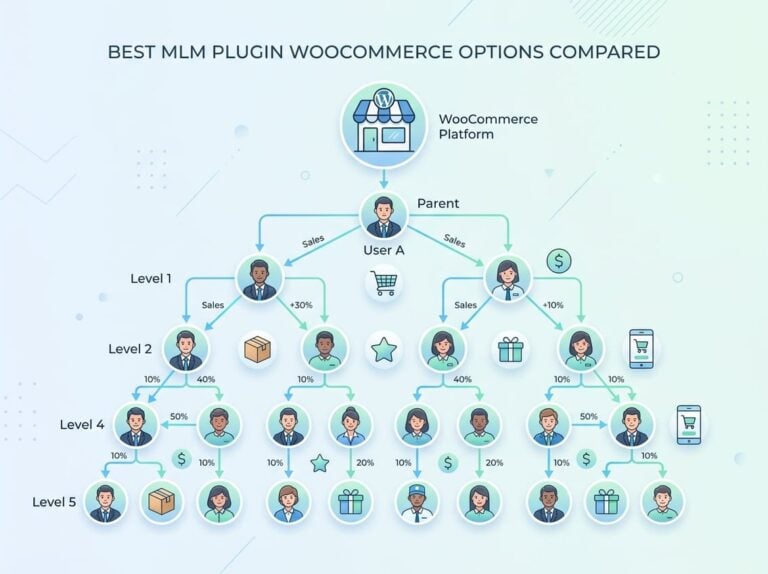
Multi-level marketing support and multi-tier commissions allow you to reward affiliates who recruit other affiliates. This is a significant growth lever for programs that want affiliates to build their own sub-networks. Combined with campaign-level banner management, you can run targeted promotions without restructuring your entire commission setup.
Ultimate Affiliate Pro supports all of these features natively, including MLM-style multi-tier commission rules, fraud controls, and campaign management, without needing separate add-ons for each one.
How Popular Plugins Compare for Different Use Cases
The WordPress affiliate plugin market splits into two distinct categories: tools for running your own program and tools for managing outbound affiliate links. Choosing the wrong category is a common and costly mistake.
Plugins Built for Running Your Own Program
These plugins handle affiliate signup, tracking, commission calculation, and payouts for your own affiliate program. The main options compared regularly include AffiliateWP, SliceWP, Solid Affiliate, Easy Affiliate, and Ultimate Affiliate Pro.
AffiliateWP is the most widely recognized and has solid WooCommerce integration, but its recurring commission support and multi-tier features require paid add-ons. SliceWP and Solid Affiliate are lighter and easier to set up, but both have limitations around advanced commission rules and MLM-style structures.
Ultimate Affiliate Pro bundles recurring commissions, multi-tier support, coupon tracking, landing pages, and mass payouts into a single plugin, which reduces the number of add-ons needed as your program grows.
Tools Built for Link Management and Content Monetization
ThirstyAffiliates, Lasso, Pretty Links, and AAWP serve a different purpose entirely. These tools are for content publishers who promote other companies’ affiliate programs, not for business owners running their own. Features like link cloaking, auto-linking, geotargeting, product boxes, best-seller lists, and comparison tables are built for Amazon Associates-style monetization.
If you are a WordPress.com affiliate or part of a managed WordPress hosting affiliate program like the Kinsta affiliate program, these link management tools make sense. They are not the right choice if you want affiliates promoting your store.
When a WooCommerce or Membership Site Needs Deeper Integrations
A WooCommerce affiliate setup needs more than basic link tracking. Subscription renewals, variable product commissions, and category-based referral rates require a plugin with native WooCommerce depth.
Membership sites that use plugins like Ultimate Membership Pro or WooCommerce Subscriptions need commission rules that fire on renewal charges, not just the initial purchase. Most lighter affiliate plugins only track the first transaction. If your business model depends on recurring revenue, your affiliate plugin must track recurring referrals or you will consistently underpay your best affiliates.
Frequently Asked Questions
Which WordPress affiliate plugin is the best choice to find affiliates in WooCommerce?
For most WooCommerce stores, a plugin that supports both link-based and coupon-based tracking, handles recurring commissions, and includes mass payout options will outperform simpler alternatives. Ultimate Affiliate Pro is a strong fit because it integrates directly with WooCommerce, supports WooCommerce Subscriptions, and does not require separate add-ons for core features like multi-tier commissions or affiliate landing pages.
How do you find affiliates for WordPress without paying for ads?
Start with your existing customer list. Identify customers who have purchased more than once or left positive feedback and send them a direct, personal invitation with clear commission terms. Creators in your niche who already write about related topics are a close second option, and a short cold email with a specific commission offer tends to convert better than a generic pitch.
What’s the fastest way to find affiliates partners and set up tracking?
Install a plugin with native WooCommerce integration, create affiliate accounts, and assign each affiliate a unique referral link and coupon code from the affiliate dashboard. The entire setup can be done in under an hour with a plugin like Ultimate Affiliate Pro, which generates affiliate links and coupons automatically and tracks both attribution methods in the same reporting interface.
How do you prevent affiliate fraud and self-referrals in a WordPress-based affiliate program?
Enable IP-based fraud detection and set rules that block purchases made through an affiliate’s own account. Most quality affiliate plugins include a self-referral blocking option in the settings. Pair this with a manual review step for unusually large first commissions until you have enough transaction history to identify patterns.
How do you handle affiliate payouts (PayPal, Stripe, store credit) without creating accounting chaos?
Set a minimum payout threshold, choose one or two payout methods, and run payouts on a fixed schedule, such as the first of each month. Mass payout tools that connect directly to PayPal or Stripe let you process all pending commissions in a single action. Store credit payouts work well for programs with high refund rates since you retain the cash flow.
Can a small WordPress site realistically hit $100/day in affiliate revenue, and what needs to be in place first?
Yes, but not from passive link clicks alone. Reaching $100 per day requires a combination of consistent organic traffic, affiliates who are actively promoting your product, and a commission structure that incentivizes ongoing effort. Recurring commissions tied to subscriptions or memberships are the most reliable path to predictable daily affiliate revenue because each retained customer compounds the affiliate’s earnings over time.